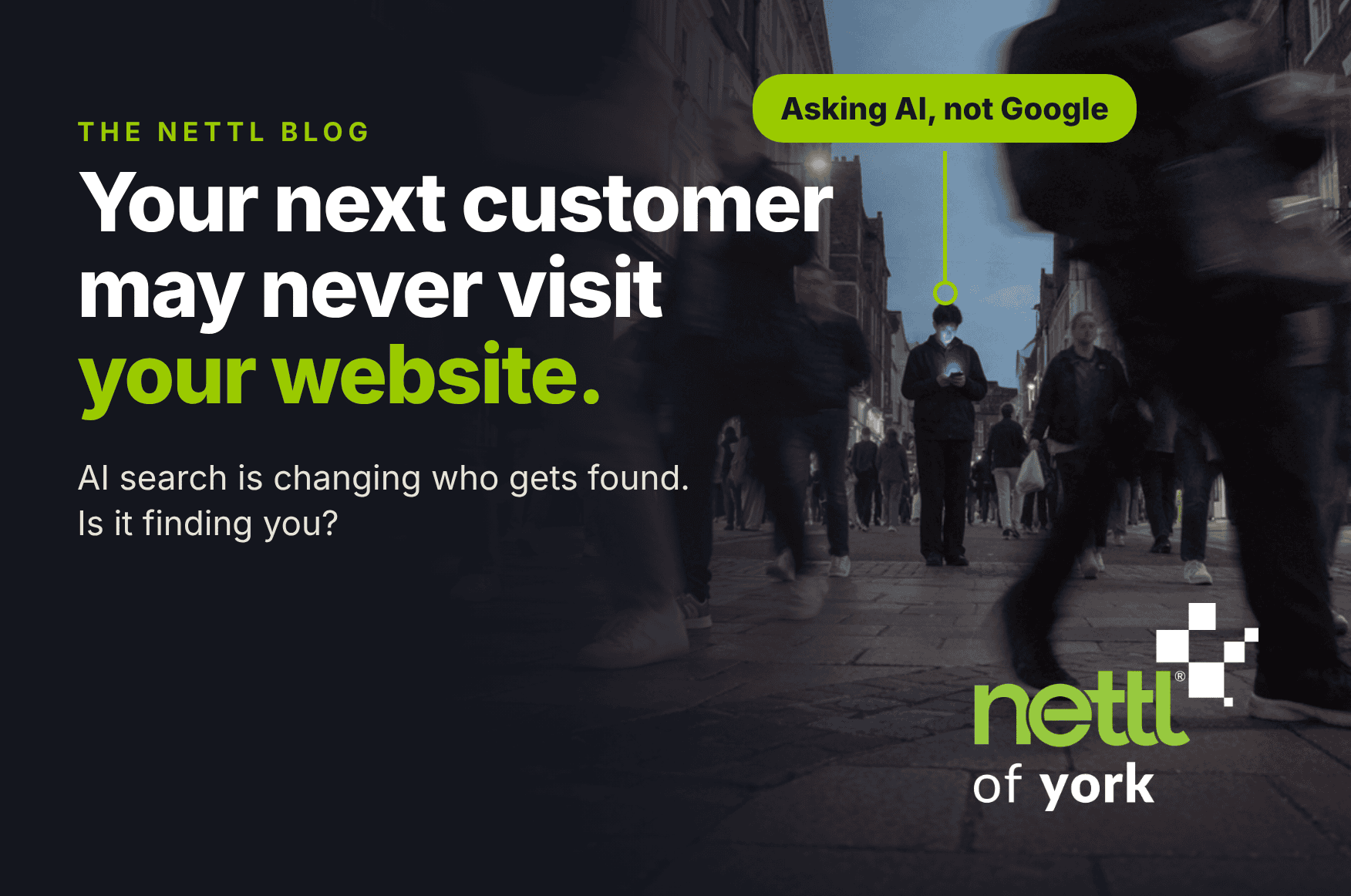
Picture this. Someone in York needs a new website. They don’t open Google. They ask an AI tool: “Who’s a good web designer in York?”
Five seconds later they have a short answer and three names. They never scroll through a page of results. They never click a link. By the time they get in touch, they’ve already decided who they trust.
If your business wasn’t one of those three names, you never knew you were in the race.
Search is turning into answers
For twenty years the game was simple: rank on page one, get the click, win the customer. That still matters. But more and more people now ask a question and get an answer, with no list of links at all.
That changes what your website is for. It’s no longer just a shop window for people who find it. It’s also the place that AI tools, search engines and Google read to decide who to recommend.
Nobody outside the big tech companies knows exactly how those tools choose. But the signs are clear enough, and they’re not mysterious. They favour businesses that are clear, consistent and trusted.
Three uncomfortable questions
Try these on your own business:
- If an AI described what you do in two sentences, would it get it right? If your website is full of slogans like “Let’s make some noise” and never says plainly what you do and where, it’s guessing.
- Is your information the same everywhere? Your address, phone number and email should match on your website, your Google Business Profile and your social media. One different postcode is enough to cause doubt.
- Is there proof someone else could quote? Recent reviews, real case studies and honest answers to common questions give tools (and people) something solid to point to.
If you wobbled on any of those, you’re not alone. Most small business websites do.
Five things you can do this month
1. Say what you do, plainly. Put it in the first line of your home page: what you do, who for and where. “Web design and print for York businesses” beats a clever slogan every time.
2. Make your details match everywhere. Pick one address, one phone number, one email. Update every place they appear.
3. Collect reviews and keep them coming. A steady stream of recent Google reviews tells people, and search tools, you’re doing good work now, not just five years ago. Ask every happy customer, and make it easy with a direct link.
4. Answer the questions your customers really ask. How much does it cost? How long does it take? What happens next? Write short, honest answers and put them on your pages. These are the exact things people ask AI.
5. Keep it fresh. A website that was last touched in 2022 looks abandoned, to people and machines. A new page or post every month or so is plenty.
Your website still matters more than ever
It’s tempting to think a website doesn’t matter if AI is doing the talking. It’s the opposite. Your website is the one place that’s entirely yours, where you decide what’s said about your business. Everything else, from AI answers to search results to review sites, pulls from it.
The businesses that get recommended won’t be the ones with the cleverest tricks. They’ll be the ones that make themselves easy to understand and easy to trust.
Not sure how your site measures up?
If you’d like an honest look, I’ll check your website and tell you what I’d change, in plain English with no jargon. Just reply or call me on 01904 501 524, or email james.dickinson@nettl.com.
James Dickinson
Nettl of York